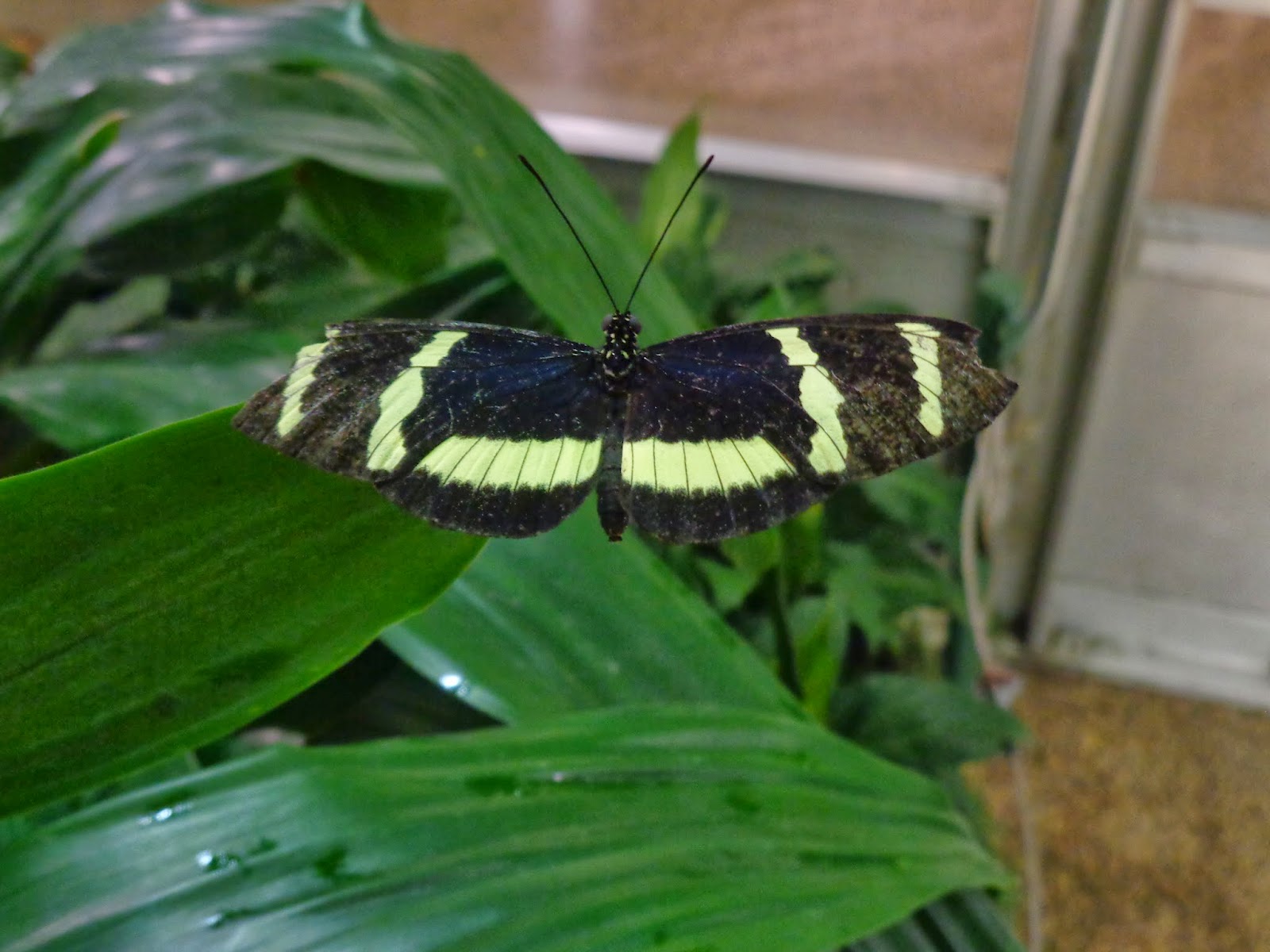
Halysidota harrisii (Adult: Female I think) 06-15-14
Finally........I get to properly write about these. I say finally because they've been in some weird decline in the past few years here and I do not know why. They used to be almost as common as
Pieris rapae here with the larvae in all stages and color variants (white~gray~yellow~yellow brown) adorning the fences outside my house & beyond. They were an integral part of my childhood and I have very fond memories of the caterpillars (my mother running screaming down the walkway when one almost got on her had I not warned her. XD Taking them to school etc) and the adults perched on the buildings and underneath awnings. Finding them flitting through the air ethereal and fairy like with their yellow-ish almost white transparency.and chasing after them reveling in their beauty as they walked around on my hand before flying off again.
Until they all but disappeared.
And I don't know why. From 2007 onward I literally watched as their numbers dropped drastically for reasons unknown, until I literally didn't see even one (2012?) and eventually they started trickling back in. But I still don't see them as often as I'd like but at least it seems they're trying to make a comeback. I'm rooting for them. Observations this year as follows:
06-15-14 1 Adult
06-27-14 1 larva (2nd~3rd instar?)
White
07-20-14 1 larva (3rd~4th instar?)
White/Off white/gray
07-26-14 1 larva (5th~6th instar?)
Golden Yellow
So far that makes 4 after today. And I have questions.
1. Exactly how many instars does this species have?
2. Is there anything on their biology/life histories?
The second one is bugging me. I went searching to see if I could find anything and the most I could find is a detailed report on a 40 something year old guy who had an allergic reaction (see
here) after handling one. I never had any problems with them. While continuing my search for info I decided to read Wikipedia's entry on them and it pissed me off........badly.
First off they basically
fail to mention that the supposed irritant properties of the setae (hairs) of the caterpillars induce reactions only in certain people. What they're basically telling you is not to handle them at all and they don't bother to back their supposed info either. No references links as to what the article is based on.
I will repeat myself.
I have handled probably hundreds of them and I never had a problem with them.
07-20-14
From today 07-26-14
As I said before I found this lovely angel in my lobby on the floor and proceeded to "rescue" it, take it upstairs and get pics & release it. I was tempted to keep it to see if it would spin a cocoon but decided to release it in the end simply due to the fact that there's practically nothing on them so I wouldn't know how to properly rear them to adulthood. I did try last year but sadly wasn't successful.
I want to wait till I have more information. Like aside from host (Sycamores
Platanus spp. Wiki mentions them feeding on
Platanus occidentalis we have
Platanus x acerfolia here only which they obviously have no problems with) where do they pupate? Do they spin cocoons? If they do where do they spin them? Between leaves? On twigs or sides of trees/buildings/other flat surfaces? Do they burrow underground to pupate?
I don't know this so I obviously decided to wait & obtain more info. Problem is there isn't any!! I haven't been able to find anything on their life cycles or biology and it's frustrating. I did however observe a possible defensive behavior in this individual. When startled it would "flinch", retract it's head & clamp down on whatever surface it was on (in this case a paper towel):
Which prompts even more questions:
1. What are their defences (besides this apparently) against predators?
2. They're brightly colored surely aside from a mouth full of apparently irritant setae they're distasteful??
Dear Lord someone needs to research these already!!
From the release
And because I simply can't help myself, some videos too:
Enjoy!! I've spammed you enough. I hope though that I can properly find out about these. Surely there has to be more info somewhere.
Until next time! Happy National Moth Week!!
ɛïɜ